💡 DIY Computer Fixes?
Grab my easy step-by-step guide and keep your computer running like new.
Many users encounter issues when they see that Windows Update says can’t run Windows 11. This message can be misleading for those whose systems are capable of running the new operating system. It’s important to recognize the implications of this notification.
What to Do When Windows Update Says Can’t Run Windows 11
Why Windows Update Says You Can’t Run Windows 11 (Even When You Can)
Understanding Why Windows Update Says Can’t Run Windows 11
That’s exactly what happened to me.
When Windows Update says can’t run Windows 11, it’s crucial to investigate further before making any assumptions about your PC’s compatibility. Many factors can lead to this message appearing.
I opened Windows Update and saw the dreaded message:
“This PC can’t run Windows 11.”
So, I assumed it was correct.
Windows 10 support is ending in October 2025, and I figured my system just wasn’t compatible. I even signed up for the Extended Security Updates program (which was free) because I thought I had no other choice.
If you see that Windows Update says can’t run Windows 11, don’t panic; there are troubleshooting steps you can take to resolve the issue. Ensure your system meets the requirements and check for updates.
It’s important to understand how to troubleshoot when Windows Update says can’t run Windows 11. This message can often be misleading.
But something didn’t feel right.
Understanding why Windows Update says can’t run Windows 11 is essential for troubleshooting potential issues with your system.
Many users feel confused when Windows Update says can’t run Windows 11, especially if their systems meet the requirements.
So, I dug deeper.
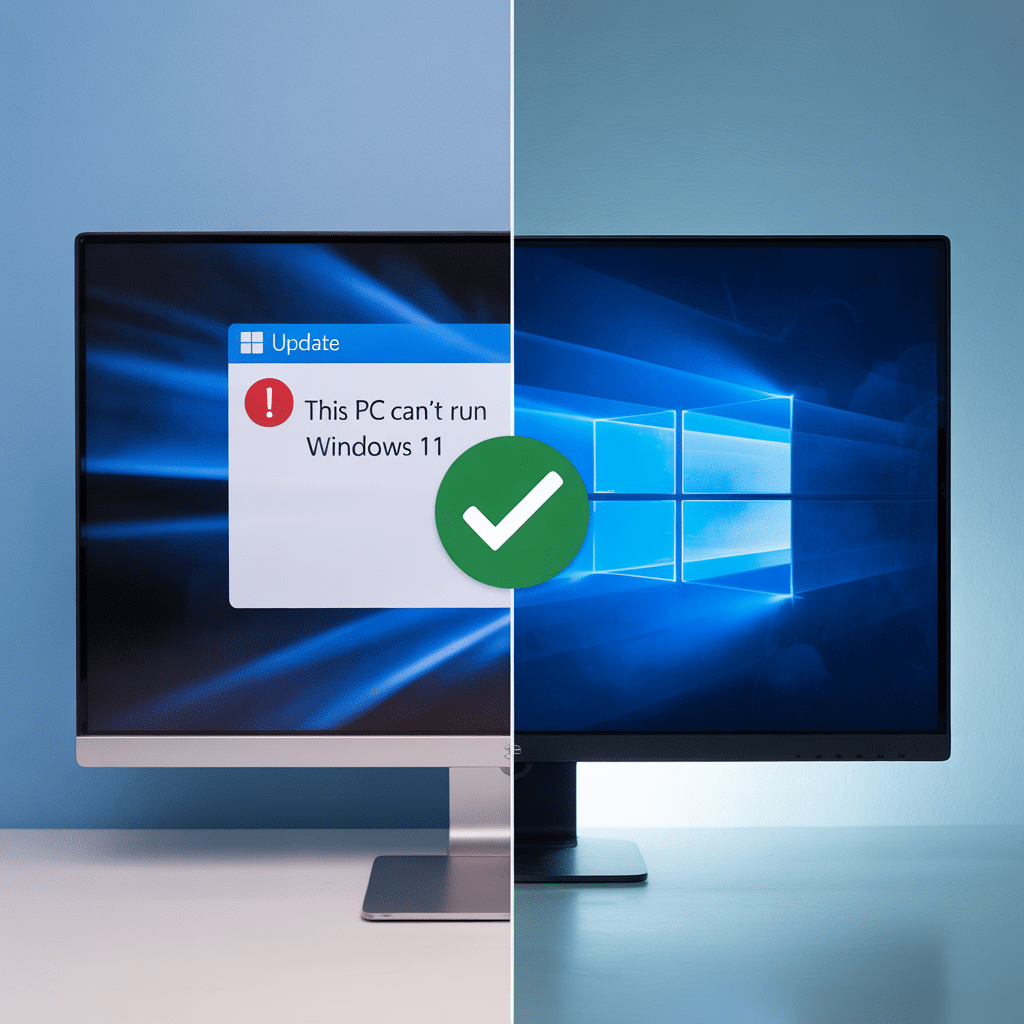
Why Windows Update Says Can’t Run Windows 11 Even When Your PC Is Compatible
Understanding the reasons why Windows Update says can’t run Windows 11 is essential for troubleshooting potential issues with your system.
Many users find it frustrating when Windows Update says can’t run Windows 11, especially after recently upgrading their hardware.
Understanding Why Windows Update Says Can’t Run Windows 11
My Computer Should Have Been Compatible
Many users, including myself, were confused when Windows Update says can’t run Windows 11, despite having compatible hardware.
When Windows Update says can’t run Windows 11, it’s essential to check for BIOS settings that might need adjustment.
On paper, my motherboard supported Windows 11.
When Windows Update says can’t run Windows 11, often it’s due to settings that need adjustment in your BIOS.
My processor was supported.
I had enough RAM.
My storage was fine.
So why was Windows Update telling me my system couldn’t run Windows 11?
It’s common to feel frustrated when Windows Update says can’t run Windows 11, especially if you’ve recently upgraded your hardware.
The issue wasn’t the hardware.
It was a setting.
Pay attention to BIOS settings when Windows Update says can’t run Windows 11, as this can be an easy fix.
The Real Problem: TPM (But Not Named TPM)
Windows 11 requires something called TPM 2.0 (Trusted Platform Module).
This issue often arises because Windows Update says can’t run Windows 11 due to TPM settings that are not enabled by default in many systems.
Here’s where people get confused…
In many BIOS systems, it’s NOT labeled “TPM.”
On Intel systems, it may appear as:
-
PTT (Platform Trust Technology)
Before assuming the worst, remember that Windows Update says can’t run Windows 11 can be resolved with some minor tweaks.
Understanding the reasons why Windows Update says can’t run Windows 11 can help you identify potential fixes.
On AMD systems, it may appear as:
Don’t be surprised if you see that Windows Update says can’t run Windows 11 without having the right settings in your BIOS.
-
fTPM
-
Firmware TPM
Many users overlook this—Windows Update says can’t run Windows 11 due to TPM settings that often go unnoticed.
So if you go into your BIOS looking specifically for “TPM,” you might think your system doesn’t support it.
That’s exactly what almost happened to me. Windows 11 requires TPM 2.0 as part of its security baseline, according to Microsoft’s official hardware requirements.
If you’ve received the message that Windows Update says can’t run Windows 11, check for the latest updates from your manufacturer, as compatibility can often change.
What I Actually Had to Enable
I went into my BIOS and couldn’t find anything called TPM.
If your BIOS settings don’t show TPM, Windows Update says can’t run Windows 11 can be a misleading message.
Don’t overlook the fact that Windows Update says can’t run Windows 11; this can often be attributed to simple BIOS configurations.
Instead, I found:
Intel Platform Trust Technology (PTT)
It was disabled.
I enabled it.
Saved changes.
Rebooted.
That was it.
After restarting, Windows Update no longer blocked the upgrade.
After following the right steps, I was relieved when Windows Update no longer says can’t run Windows 11.
No new motherboard.
No new processor.
No new computer.
Just one setting.
Why Windows Update Gets This Wrong
Many manufacturers shipped systems with TPM capability turned off by default.
The confusion occurs because Windows Update says can’t run Windows 11 without providing direct guidance on how to fix the issue.
Windows Update only checks whether TPM is enabled.
If it’s disabled, Windows assumes your PC is incompatible.
It doesn’t say:
“Go enable this in BIOS.”
It just says:
“Your PC can’t run Windows 11.”
That message causes unnecessary panic.
Before You Assume Your PC Is Too Old
If you’re seeing the compatibility warning, check your BIOS for:
Before assuming your system is too old, remember that Windows Update says can’t run Windows 11 could be due to a simple setting.
Intel Systems
-
PTT
-
Platform Trust Technology
AMD Systems
-
fTPM
-
Firmware TPM
Enable it.
Reboot.
Check Windows Update again.
You might be surprised.
When a PC Truly Cannot Run Windows 11
To be fair, some systems genuinely cannot upgrade.
Ultimately, if you find that Windows Update says can’t run Windows 11, check those settings first before considering hardware upgrades.
Common reasons include:
-
7th-generation Intel processors or older
-
Very old AMD processors
-
No UEFI support
-
Secure Boot not supported
But I’ve seen many perfectly capable systems blocked simply because a setting was turned off.
Quick Tip:
If Windows Update says your PC can’t run Windows 11, check BIOS for PTT (Intel) or fTPM (AMD) before assuming your computer is too old.
It’s a quick tip: if Windows Update says can’t run Windows 11, make sure to check your BIOS for the necessary settings.
Need Help Checking Safely?
If you’re not comfortable going into your BIOS settings, I can safely check compatibility and guide you step-by-step.
No upsells.
No unnecessary hardware.
No pressure.
Remember, if Windows Update says can’t run Windows 11, I’m here to help you troubleshoot and find a solution.
If your PC truly can’t run Windows 11, I’ll tell you honestly.
If it can, we’ll enable the right setting and move forward.
Let’s make sure that Windows Update says can’t run Windows 11 is not a permanent obstacle for your PC.
Why does Windows Update say my PC can’t run Windows 11?
Often it’s because TPM is disabled in BIOS. Windows only checks if TPM is enabled — not whether your motherboard supports it.
What is TPM?
TPM stands for Trusted Platform Module. It’s a security feature required by Windows 11.
What is PTT in BIOS?
PTT (Platform Trust Technology) is Intel’s firmware-based TPM. Enabling it satisfies the Windows 11 TPM requirement.
What is fTPM?
fTPM is AMD’s firmware-based TPM solution. It performs the same function as TPM 2.0.
Is Extended Security Updates required if my PC supports Windows 11?
No. If your PC supports Windows 11 after enabling TPM/PTT/fTPM, you can upgrade instead of relying on extended updates.