AI Scams in 2026: What Every Computer User Needs to Know
If you’ve felt like online scams have suddenly gotten more convincing, you’re not imagining it.
In 2025 and 2026, artificial intelligence made a massive leap forward — and scammers rushed in right behind it. The result is a new generation of scams that look, sound, and feel frighteningly real.
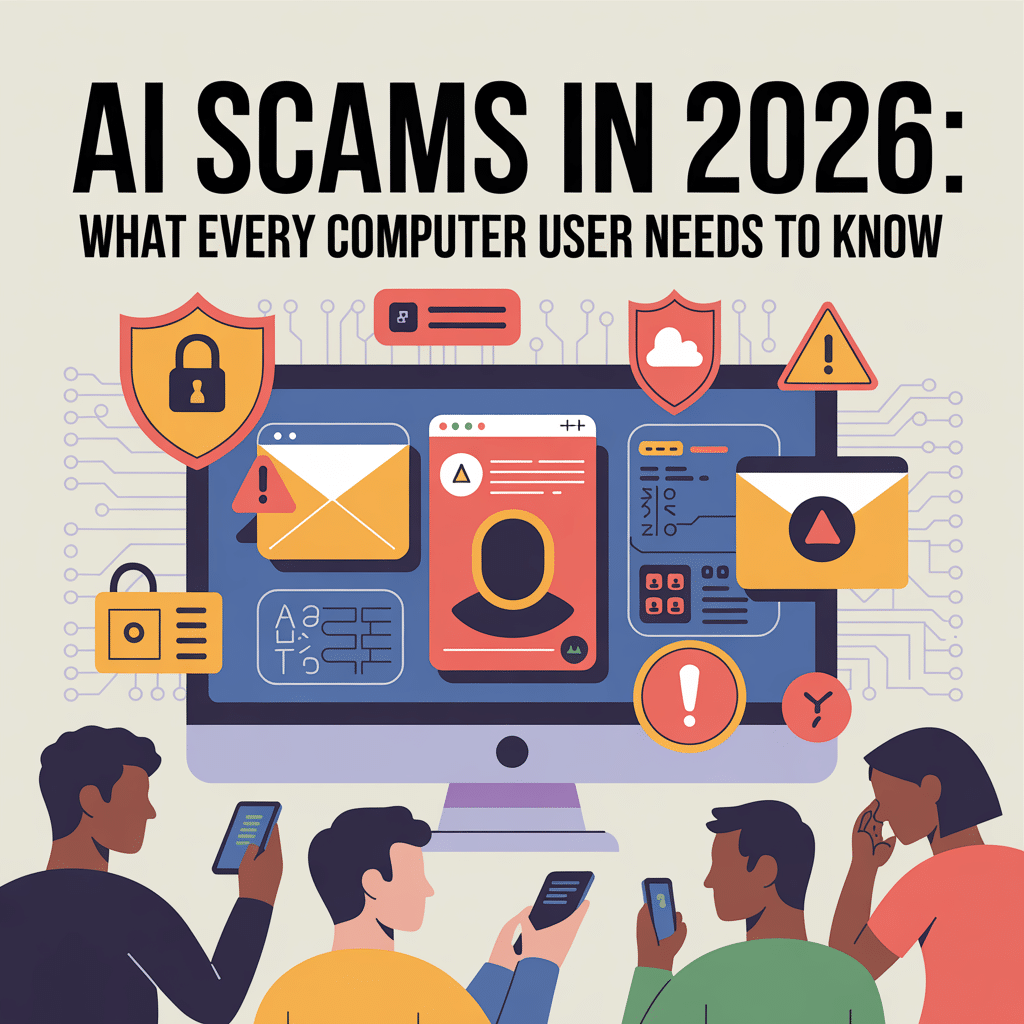
Some of them use real voices.
Some use fake videos.
Some even pretend to be your family.
This page explains what’s happening, what to watch for, and how to stay safe.
Why Scams Suddenly Feel So Real
Before AI, scammers had to be sloppy.
Bad grammar. Fake accents. Obvious lies.
Now they don’t.
With AI tools, criminals can:
-
Clone someone’s voice in seconds
-
Write perfect emails with no spelling mistakes
-
Create fake videos of real people
-
Mimic the tone of your bank, Apple, Amazon, or even your grandchild
These are no longer “obvious” scams. Many smart people are being fooled.
The Most Dangerous AI Scams in 2026
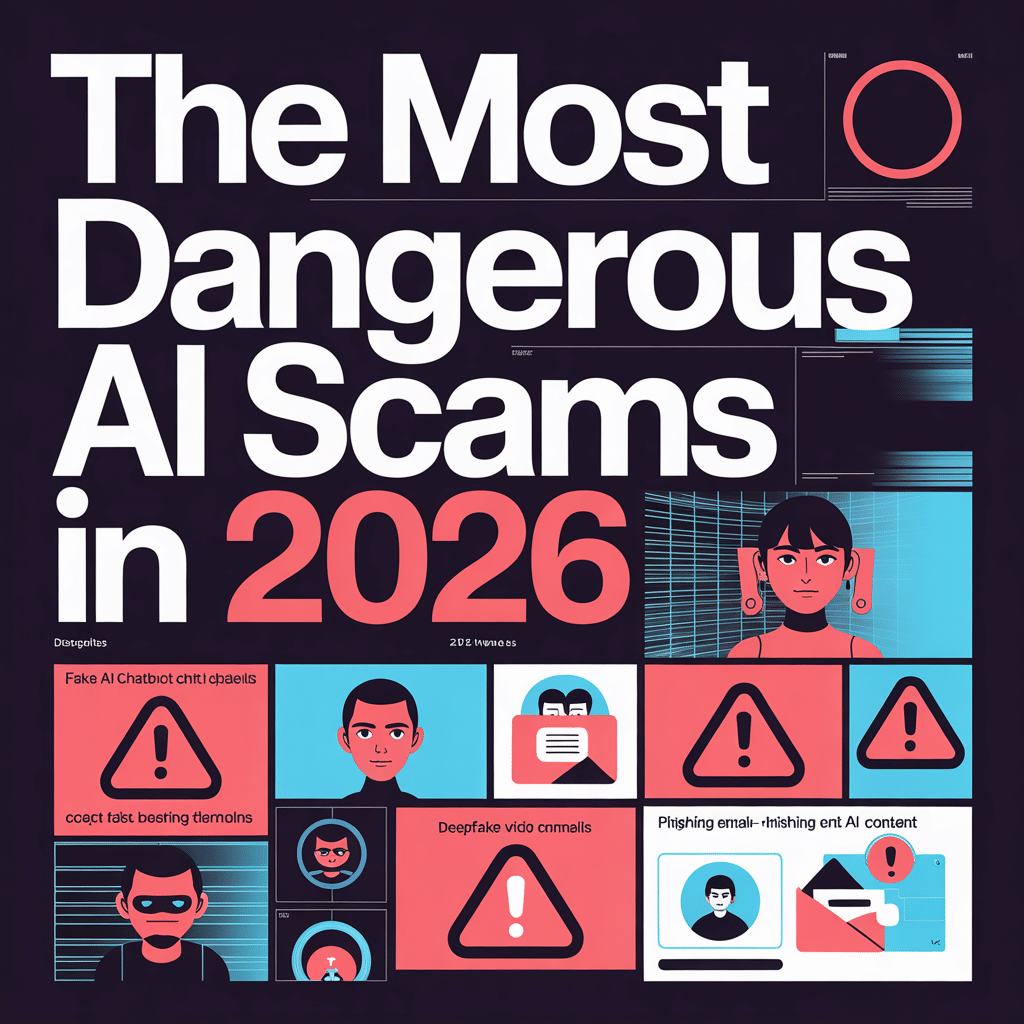
These are the ones I see hurting people the most.
1. The “Grandchild in Trouble” Call
You get a phone call.
It sounds exactly like your grandchild.
They’re crying. They say they’ve been arrested or in an accident. They beg you not to tell anyone. They need money sent immediately.
It feels real because the voice is real — cloned from social media videos, voicemail greetings, or TikTok clips.
If someone asks for secrecy and money, it is always a scam.
2. Fake Bank & Credit Card Calls
You get a call saying:
“This is fraud prevention from your bank.”
The voice is calm, professional, and knows your name. Sometimes they even know the last four digits of your card.
They tell you there’s suspicious activity and ask you to “verify” your information.
Your real bank will never ask for your full card number, PIN, or login codes.
3. AI-Generated Emails That Look Perfect
Scam emails used to be easy to spot.
Now they look exactly like real companies.
You may receive:
-
A “Netflix billing problem”
-
A “PayPal account warning”
-
An “Apple security alert”
The logos look real. The wording is perfect. The links are fake.
If you didn’t go looking for a problem, don’t click anything.
4. Fake Videos of Celebrities and Companies
You may see videos of:
-
Elon Musk promoting a crypto giveaway
-
A bank CEO offering refunds
-
A news anchor announcing a special deal
These videos are entirely fake — created by AI.
If someone famous is offering you money, it is always a scam.
5. “Remote Support” Scams
A pop-up appears saying your computer is infected.
It gives a phone number.
The person on the phone sounds knowledgeable and helpful. They use AI-written scripts and professional-sounding voices.
Once they get access to your computer, they can steal files, watch your screen, or lock your system.
Never call numbers from pop-ups.
The One Rule That Stops Almost Every Scam
Scammers create urgency.
They want you scared, rushed, and alone.
The moment someone says:
-
“Don’t tell anyone”
-
“Act now”
-
“Your account will be closed”
-
“You must send money today”
Stop. Breathe. Get a second opinion.
Real companies don’t rush you. Scammers always do.
If You’re Not Sure — Ask First
This is the part most people don’t realize.
You don’t have to handle this alone.
If something feels strange, confusing, or too good to be true, it probably is. A quick second look can save thousands of dollars.
I spend a huge part of my day helping people figure out:
-
Is this email real?
-
Is this website safe?
-
Is this call a scam?
-
Is this message fake?
And yes — I’d rather tell you it’s safe than watch you get hurt.
AI has made amazing things possible…
but it has also given scammers superpowers.
The good news is that awareness beats technology every time.
If something feels off, trust that feeling.
And if you ever want a calm, honest second opinion, that’s what I’m here for.
— That Tech Jeff
Related
Federal Trade Commission — Scams & Consumer Advice
California Department of Financial Protection and Innovation (DFPI) — Protect Yourself from AI Scams